Community Outreach
All the inventions, innovations and discoveries of the greatest minds are nothing until they are passed on to the community. NC State Engineering is known for its groundbreaking research, but we are also known for our outreach programs that enrich the lives of the citizens of our state, nation and world.
NC State Engineering faculty, staff and students share new technologies and resources with businesses, government and the community in a variety of ways, including extension programs, partnerships and economic development initiatives, professional training, distance education, pre-college K-12 programs and summer camps.
Centennial Campus
NC State’s Centennial Campus is a research science park made up of university, corporate and government facilities. The proximity of these facilities and personnel fosters an exchange of ideas and resources that are mutually beneficial. NC State Engineering has a long history of strong partnerships with businesses and government agencies through funding and many joint research and development projects. Our corporate and government partners have had opportunities to work with and recruit both our graduate and undergraduate students and have access to our state-of-the-art facilities and equipment.
The College has four engineering buildings on Centennial Campus: the Larry K. Monteith Engineering Research Center (MRC), the Constructed Facilities Laboratory (CFL) and Engineering Buildings (EB) I and II, home to four academic departments. There are plans for three more engineering buildings, allowing most of the College to relocate to Centennial Campus.
Engineering Career Fair
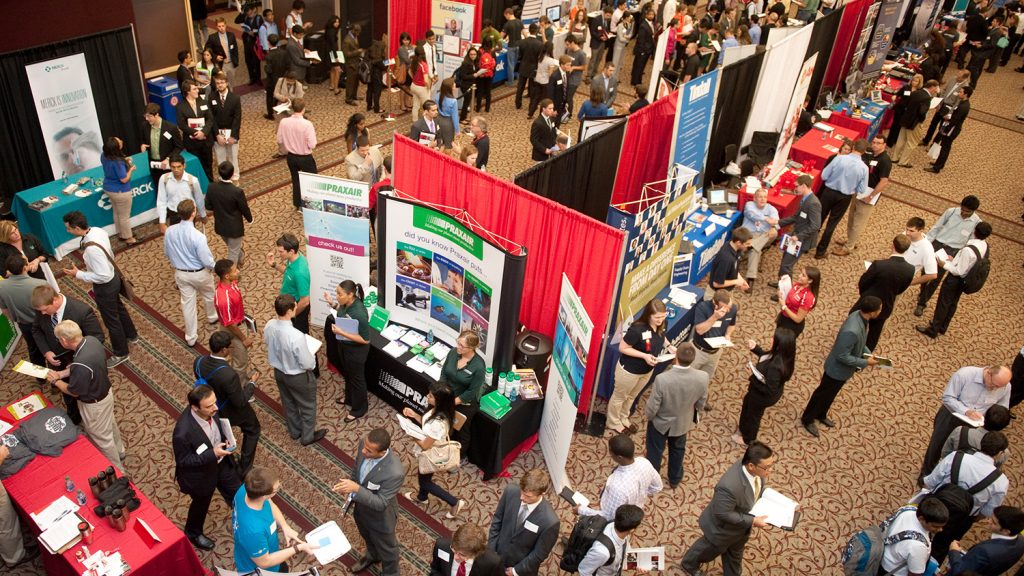
Twice a year, in the spring and fall, the College hosts the Engineering Career Fair. The event provides an opportunity for prospective employers to meet with engineering students interested in working for their companies. The Engineering Career Fair is one of the largest career fairs in the country held specifically for engineering students.
Engineering Entrepreneurs Program
Open to both engineering and nonengineering students, the Engineering Entrepreneurs Program (EEP) curriculum is a full-immersion educational environment for new product and business prototyping, where students model both a product and a company, not just a business plan. By creating multidisciplinary “virtual” start-up companies, called eTeams led by senior engineering students, the program mimics the actual environment of a start-up company and combines experimental and theoretical learning, plus advising and mentoring from technology product developers, entrepreneurs and business professionals.
Engineering Online
Engineering Online is a distance education program that serves the needs of the adult learner. While these students want to pursue an advanced engineering education, they often cannot go to college or graduate school full time for reasons such as family obligations, financial considerations or military service. Engineering Online enables them to earn engineering graduate degrees with the flexibility of online classes.
Engineering Online offers eight engineering master’s degree programs, as well as certificate programs and the site-based 2+2 program for undergraduates who want an engineering degree but are attending another institution.
Engineering Place (K-20 Outreach)
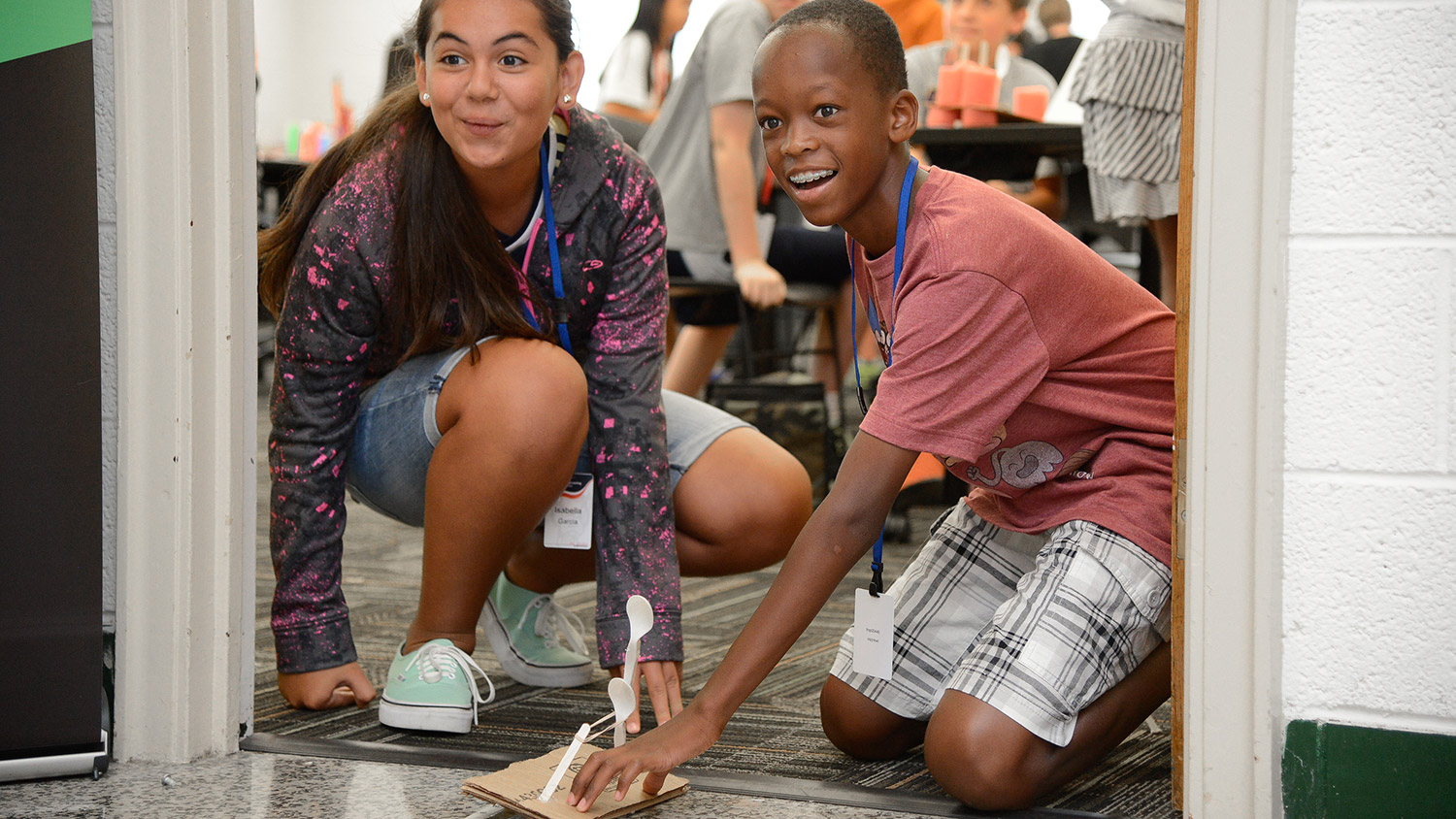
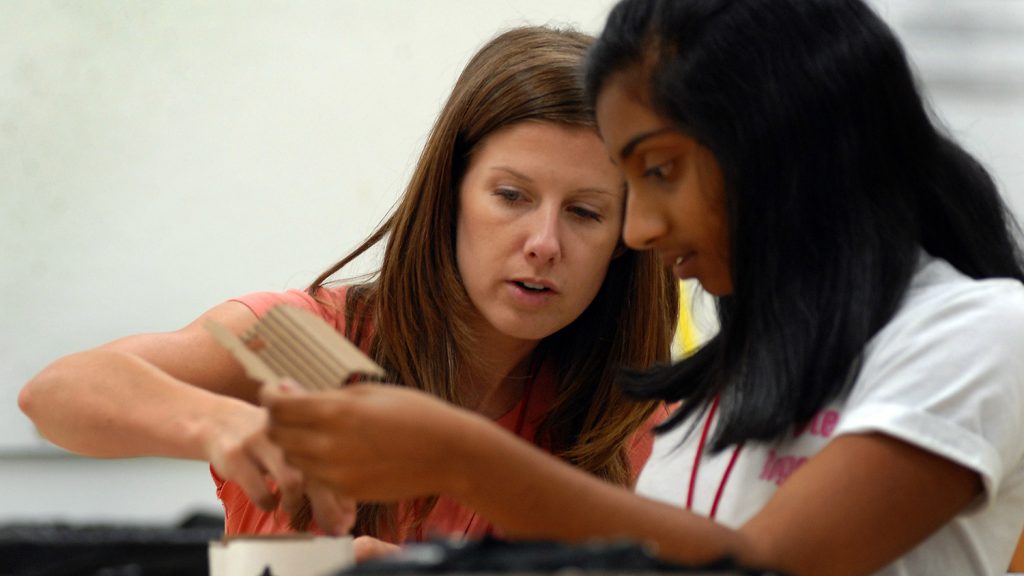
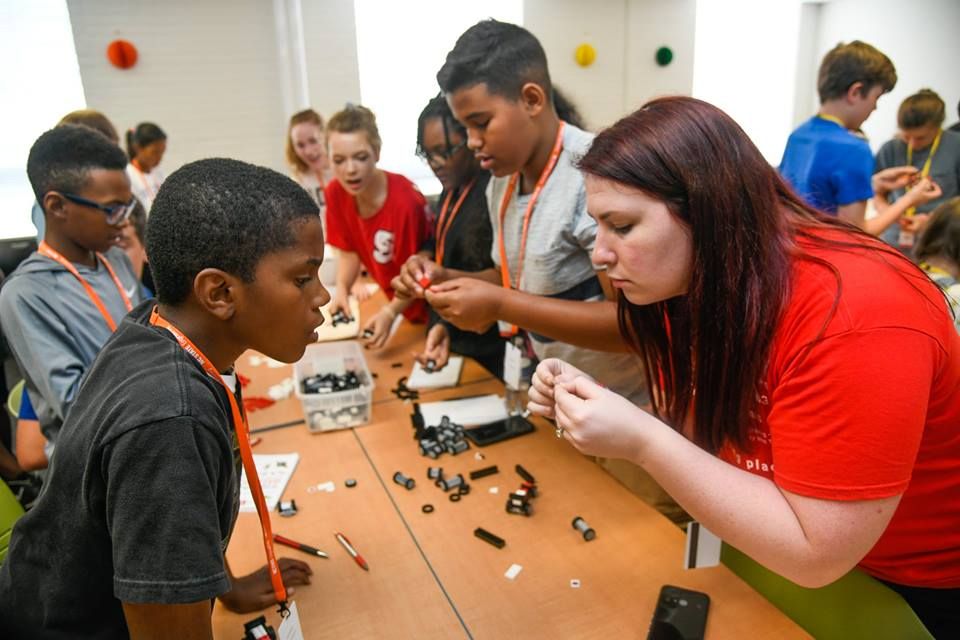
Engineering Place aims to show students of all ages and levels that engineering is more than buildings and machines. For these children an early introduction to engineering becomes an opportunity to construct a catapult, attend a summer learning program, compete in science and math competitions or work with college students and graduates on projects designed for hands-on learning.
Supported by over $3 million in grants for science, technology and mathematics education, the Engineering Place annually engages in statewide outreach to more than 5,000 students and 500 teachers in K-20 programs.
Ergonomics Center of North Carolina
The Ergonomics Center of North Carolina is a membership-based organization housed in the Edward P. Fitts Department of Industrial and Systems Engineering at North Carolina State University. Founded in 1994, the Center was created to make workplaces safer, more productive, and more competitive by providing practical, cost-effective ways to reduce or eliminate America's fastest-growing occupational injury and illness problem: painful, crippling cumulative trauma disorders. The Center provides occupational ergonomics consulting, training programs, and research for corporations, facilities, and individuals to support and enhance a company's ergonomic efforts.
Golden LEAF Biomanufacturing Training and Education Center
The Golden LEAF Biomanufacturing Training and Education Center (BTEC) is a member of North Carolina's Biomanufacturing and Pharmaceutical Training Consortium (BPTC) and is located on the NC State’s Centennial Campus. The only center of its kind in the nation, BTEC simulates a biomanufacturing facility. Its purpose is to facilitate the growth of North Carolina’s rapidly expanding biomanufacturing industry by creating a well-trained, industry-focused workforce through advanced hands-on training and education.
Industrial Extension Service (IES)
Our innovation and advances directly benefit North Carolina businesses through the Industrial Extension Service (IES) because we know that successful, sustainable businesses make a successful, sustainable state. Combining industry specialists and experience with university resources and expertise, IES is dedicated to supplying North Carolina businesses with the tools and services they need to help increase productivity, efficiency, quality and ultimately profit.
Minority Engineering Programs
The mission of Minority Engineering Programs is to develop and maintain programs that assist in the recruitment, retention and graduation of African American, Native American, and Hispanic students in engineering and computer science. The program offers support such as tutorial programs, scholarship opportunities, overnight recruitment stays, summer transition programs, counseling services, student advancement and retention teams and freshman orientation courses.
North Carolina Solar Center
The North Carolina Solar Center seeks to benefit North Carolina by advancing renewable energy for a healthy environment and a sustainable economy. Full of new ideas on renewable energy sources such as solar, wind, biomass, hydrogen and biofuel energies, the center also focuses on green building, technical assistance and policy analysis for the state and other agencies, industry training and education and K-12 outreach, as well as maintains a nationally recognized Database of State Incentives for Renewables in Efficiency (DSIRE) at dsireusa.org. The DSIRE site receives over 100,000 visitors each month.
PURPOSE Institute
PURPOSE, which stands for Promoting Underrepresented Presence On Science and Engineering Faculty, focuses on the development of African-American, Hispanic and Native American science and engineering faculty members. Although The PURPOSE Institute was founded in 2004 to boost the numbers of underrepresented minorities on engineering faculties, the institute also sponsors outreach activities for K-12 students from groups underrepresented in engineering.
RAMP-UP
The RAMP-UP Program (Recognizing Accelerated Mathematics Potential in Underrepresented People) places NC State engineering and education students and Shaw University mathematics and computer science students in local schools to collaborate with teachers and create hands-on learning experiments. The goal is to create a real excitement for learning math among K-12 students and to increase the number and diversity of students taking algebra and calculus courses in middle and high school.
Summer Programs
The College of Engineering offers summer learning programs to three K-12 age groups: high school, middle school and elementary school students. The summer workshops for high school students are weeklong residential programs through which students can explore engineering disciplines. These residential programs also give high school students an opportunity to experience college life at NC State. Middle school and elementary school students are introduced to engineering through weeklong day camps that feature hands-on, creative activities. Over 1,000 K-12 students attend College of Engineering summer programs each year.
Virtual Computing Lab
The Virtual Computing Lab (VCL) provides around-the-clock remote access to NC State's large software library of engineering, design and scientific applications to students and faculty at NC State and other UNC System institutions. There are plans to offer VCL access to K-12 and community college students across North Carolina.
Women in Engineering
The Women in Engineering program serves to coordinate, educate and sponsor many programs for women and works to create an environment that encourages, supports and challenges women in engineering to achieve even higher levels of success. The program has a close relationship with the NC State Women's Center and includes resources such as a one-on-one peer mentoring program for women engineers, an active student chapter of the Society of Women Engineers and K-12 Outreach teams.
The program also supports a living and learning community for women scientists and engineers called WISE (Women in Science and Engineering). Designed especially for first and second-year women majoring in mathematics, statistics, science or engineering at NC State, the WISE Village brings young students together with upper-class mentors in one residence hall.